Key outcomes of NONA: Turning Degraded Spaces into Opportunities for Sustainable Development
How can we breathe new life into abandoned spaces while creating value for local communities? The NONA – New Governance for New Spaces project has been exploring this question across the Danube region, developing practical approaches to more responsible spatial planning and investment.
Launched in the context of the New European Bauhaus (NEB) on the Danube NEB Lab, the European Commission-supported initiative, connecting sustainability, inclusion and quality of experience, NONA set out to turn these principles into tangible change on the ground. Over two and a half years, 18 project partners and 17 further network members worked together to strengthen the capacities of cities and regions to attract and implement green investments in degraded areas – making better use of existing spaces instead of consuming new land.
A new approach to spatial planning
At the heart of NONA is a simple but important shift: spatial planning should not only manage land and infrastructure, but actively create value for people, communities and the environment. This requires new ways of working across sectors, bringing public authorities, businesses, civil society and investors together to shape a shared vision and turn it into viable projects.
The project developed and tested its approach in 10 pilot areas across the Danube region, ranging from metropolitan areas and mid-sized cities to small border towns. Through practical work on the revitalisation of degraded buildings and spaces, partners strengthened cross-sector cooperation, improved their investment portfolios and developed new ways of engaging potential investors. In several locations, the approach also led to changes in municipal structures and development practices, helping make sustainable investment a more systematic part of local planning.
In Ravne na Koroškem, Slovenia, for example, a new business model for managing a degraded area helped reorganise public-private cooperation and secure an additional €1.5 million for site development during the project. In Virovitica, Croatia, the NONA approach became embedded in municipal processes, including through the establishment of a cross-sectoral body coordinating investments in physical space. Similar governance solutions were developed in Veszprém, Hungary, and Šabac, Serbia.
From experience to practical tools
The lessons learned from the pilot areas have been brought together in the NONA Territorial Planning Model, a practical approach to planning and implementing green investments. It is presented through three complementary publications: a Guide to Mainstreaming Green Investments, a Handbook on Investor Relations with tools for assessing investment readiness and engaging investors, and a Country-specific Place-based Governance Model drawing on experiences from all 10 pilot areas.
Together, these resources help local and regional actors move from ideas to investment-ready projects. They also highlight an essential lesson: successful revitalisation depends not only on funding, but on leadership, shared responsibility and the ability to build lasting partnerships around a common vision.
Keeping the momentum: the NONA Academy and Danube Impact Investment Hub
NONA’s work continues beyond the project. The NONA Academy will support a growing community of practitioners and investors through tailored assistance, peer learning and capacity-building activities. In cooperation with strategic partners, including impact investor Fund 2740 and Unleash.org, it will help local communities develop the skills and partnerships needed to lead complex investment processes.
The Danube Impact Investment Hub will complement this work by connecting project developers with impact investors and creating opportunities to discuss and advance concrete investments. The first Danube Investment Forum took place in Reșița, Romania, in April 2026, followed by a regional event in Celje, Slovenia, on 24 September 2026. Further regional investment forums and co-creation workshops are planned for 2027–2029.
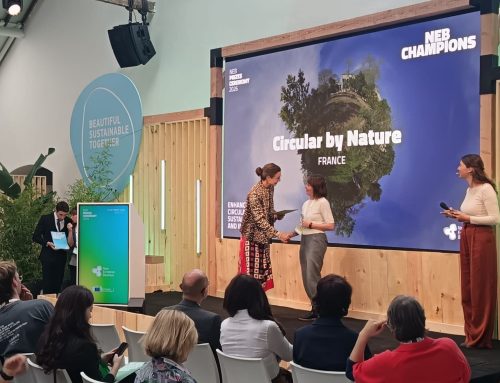
NONA has also contributed to wider European discussions on sustainable territorial development. Its approach has gained recognition as a flagship project within the EU Strategy for the Danube Region and the New European Bauhaus community. The project was also selected to join the the Advisory Board for the emerging NEB Funding Hub, which aims to facilitate financing for place-based transformation projects, particularly in smaller cities.
NONA LEAP: shaping a new generation of leaders to mainstream the NONA approach
As the first NONA chapter closes, we were happy to learn that our follow-up project NONA LEAP will continue the legacy and further mainstream the NONA results. As determined during NONA, attracting and implementing sustainable investments efficiently depends on leadership and continuous cooperation accross sectors and governance levels.
The main objective of NONA LEAP is to develop a Leadership Platform that functions as an incubator for a new generation of leaders capable of meaningfully engaging civil society, youth, public and private sectors, investors, and other local actors in territorial development processes. By strengthening leadership capacities and fostering a culture of cooperation, the project supports local authorities and communities in jointly identifying needs, co-creating solutions and advancing inclusive development across the Danube Region.
Starting in December, 15 partners will work accross the Danube region to raise a new generation of leaders, equipped with knowledge and capacities to bring visions into realities on the ground.
Making better use of the spaces we already have
NONA demonstrates that revitalising degraded spaces is not simply a matter of renovating buildings. It is an opportunity to rethink how places develop, how stakeholders cooperate and how investment can deliver long-term environmental, social and economic benefits.
By combining practical experience, new planning methods and lasting partnerships, NONA has laid the foundations for a more responsible approach to territorial development – one that helps communities across the Danube region turn underused spaces into places of opportunity.