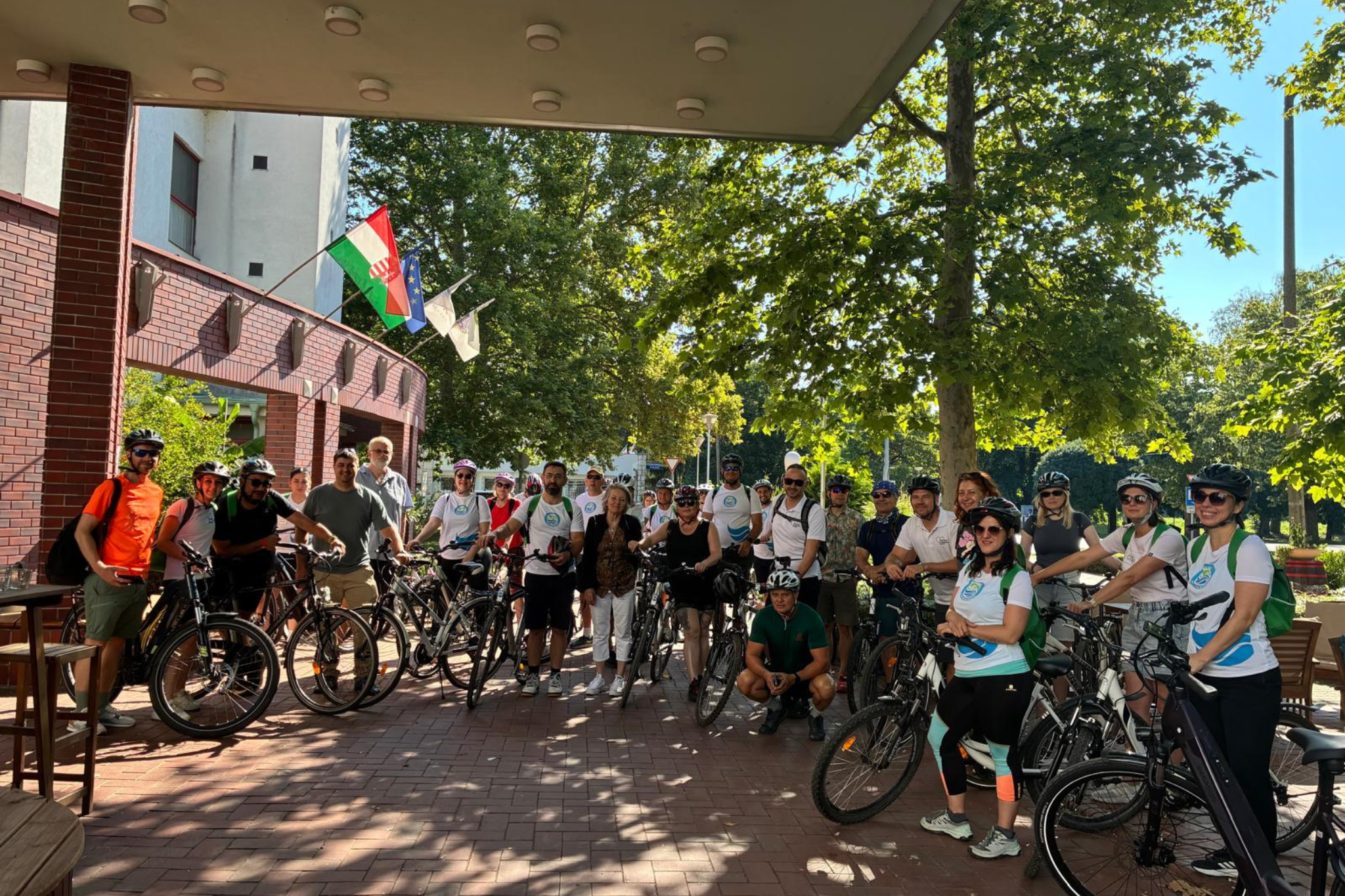
After more than two years of successful cooperation, the Inclusive Border Cycling (IBC) project, a flagship initiative of the EU Strategy for the Danube Region (EUSDR) Priority Area 3, has officially concluded, leaving behind practical tools, innovative tourism products and a strong network of partners committed to inclusive and sustainable tourism development. The project promotes sustainable and inclusive cycling tourism by connecting cultural and natural heritage with local communities and creating new opportunities for vulnerable groups in remote border regions.
Running from January 2024 to June 2026, the project brought together 16 partners from eight Danube countries. Iskriva Institute, as a project partner, played a key role in coordinating activities, engaging stakeholders and contributing to the development and testing of inclusive cycling tourism solutions.
Making Cycling Tourism More Inclusive
The project developed practical tools that help destinations make cycling tourism more accessible while supporting local communities and small businesses.
One of the project’s flagship achievements is the launch of The Danube Story Portal, an interactive digital platform showcasing inclusive cycling routes, local stories and tourism experiences across the Danube Region. The portal promotes lesser-known destinations and makes information on accessible cycling tourism easier to find.
Practical Results with Long-Term Impact
The project delivered several practical outputs that can be used by tourism organisations, local authorities and other stakeholders. These include:
- Innovative guidelines for maintaining cycling routes through the involvement of vulnerable groups, as well as recommendations for integrating local products and brands into cycling tourism experiences.
- The development of the Transnational Inclusive Cycle Product Model (TICPM), offering a transferable framework for integrating vulnerable groups into tourism value chains.
- Cycling Together: Heritage, Communities and Local Value – The Inclusive Cycling Tourism Handbook, providing practical guidance for replicating successful pilot actions in other regions. More information HERE.
- Inclusive tourism packages tailored to the needs of older adults and young travellers, creating new business opportunities and supporting employment in remote border regions. You can see an example HERE.
- Cross-generational volunteer programmes, bringing together young people and seniors to help maintain, promote and enrich local cycling trails.
- A Transferability Marketing Action Plan, supporting the replication and scaling-up of successful inclusive cycling models across Europe.
Reaching More Than One Million People
The Inclusive Travel Challenge, an awareness-raising and engagement social media campaign, implemented across seven countries, generated more than one million social media views and interactions, significantly increasing awareness of accessible, inclusive and sustainable tourism among diverse audiences.
Benefits for Slovenia and the Danube Region
The Inclusive Border Cycling project demonstrates that sustainable tourism can successfully combine environmental responsibility with social impact. Through cross-border cooperation, innovation and community engagement, the project has developed practical solutions that strengthen regional resilience, create new economic opportunities and improve the quality of tourism experiences for both visitors and local communities.
For Slovenia, the project has helped position inclusive cycling tourism as an emerging development opportunity by strengthening local partnerships, promoting lesser-known destinations and providing practical tools that municipalities, tourism organisations and local businesses can continue to use in the future.
The IBC – Inclusive Border Cycling project was co-funded by the Interreg Danube Region Programme.