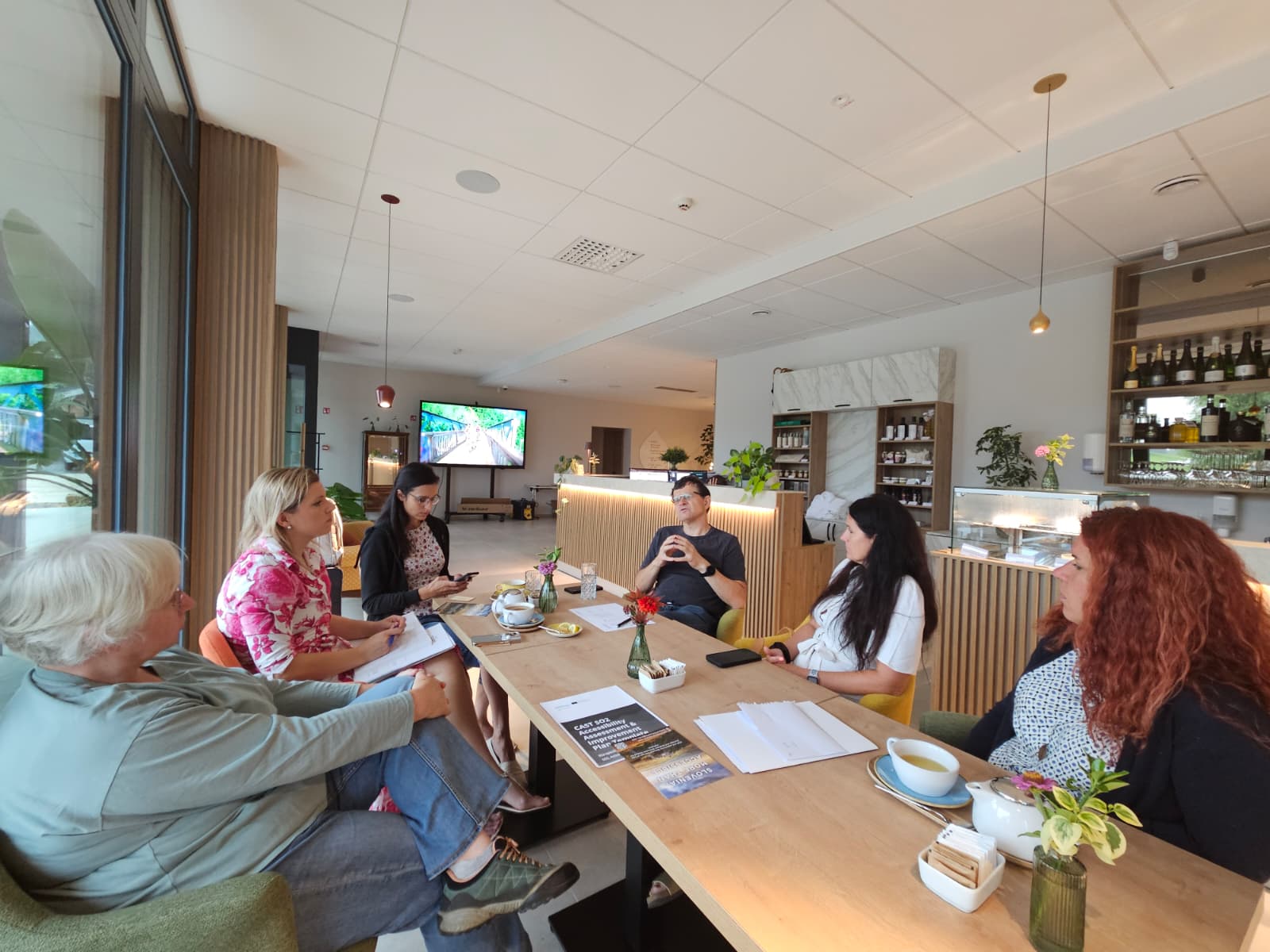
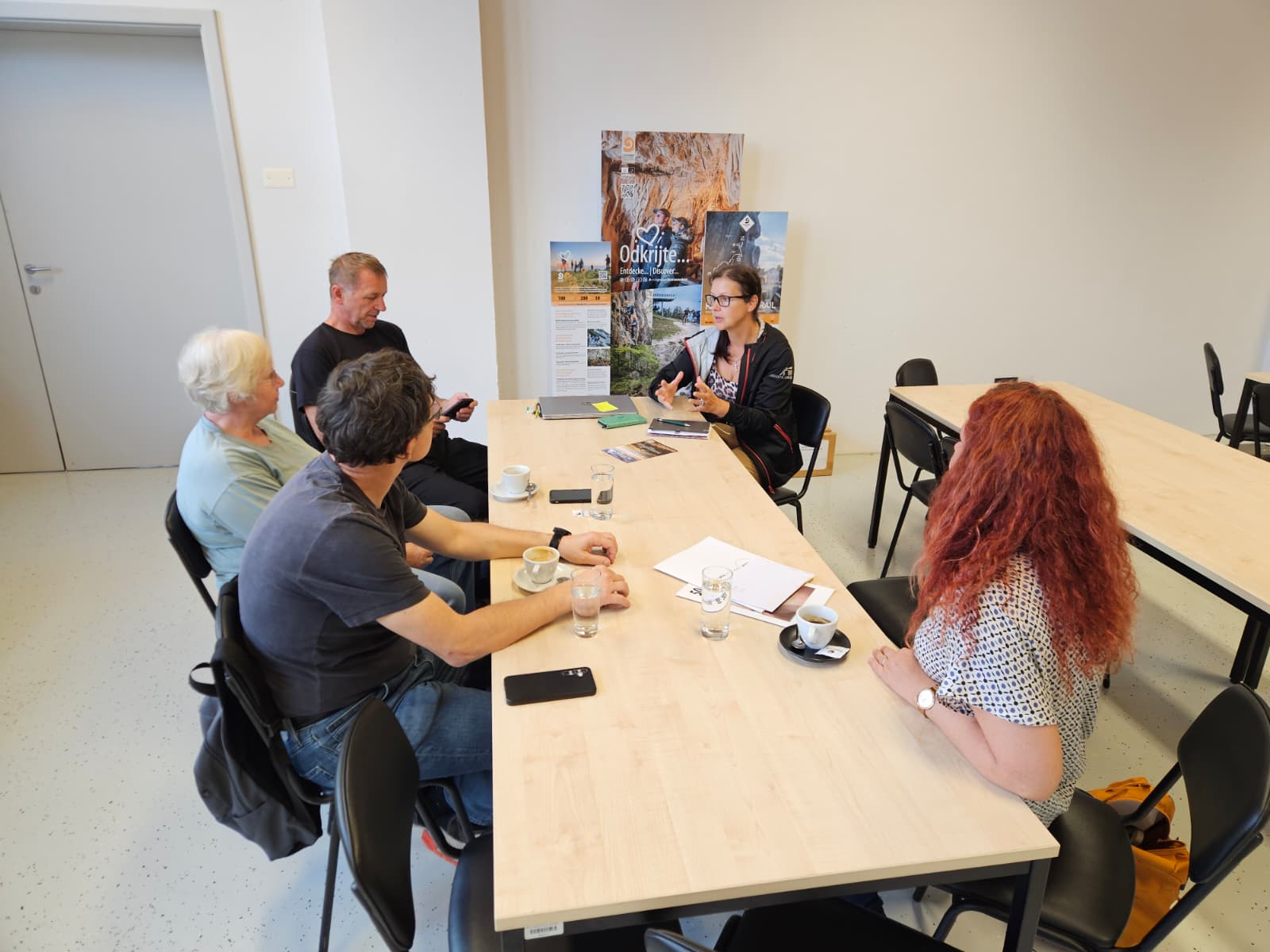
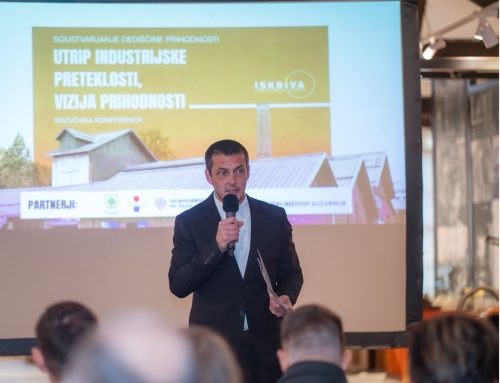
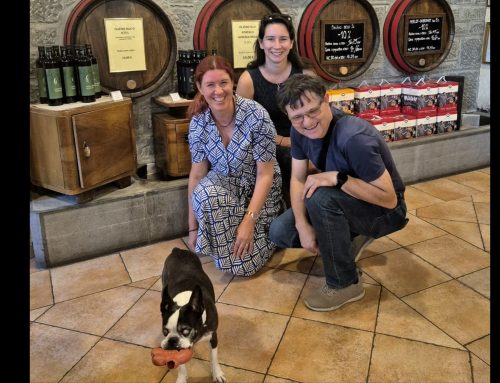
Ravne na Koroškem, 26 August 2026 – As part of the CAST project (Culture TrAnsforming CommuniTies and economies), we visited Ravne na Koroškem, where we will work with local tourism providers to develop an accessible tourism product. The purpose of the two-day visit was to explore the local tourism offer, assess its accessibility, and gauge the providers’ readiness to participate in the development of an accessible tourism package.
The visit was attended by Urška Dolinar and Matej Jereb-Sedej from Zavod Iskriva; Saša Jelen from the Institute for Culture, Sports, Tourism and Youth Activities Ravne na Koroškem; and Igor Miljavec and Jana Lavtižar from the Nova Gorica Intermunicipal Association of the Blind and Visually Impaired.
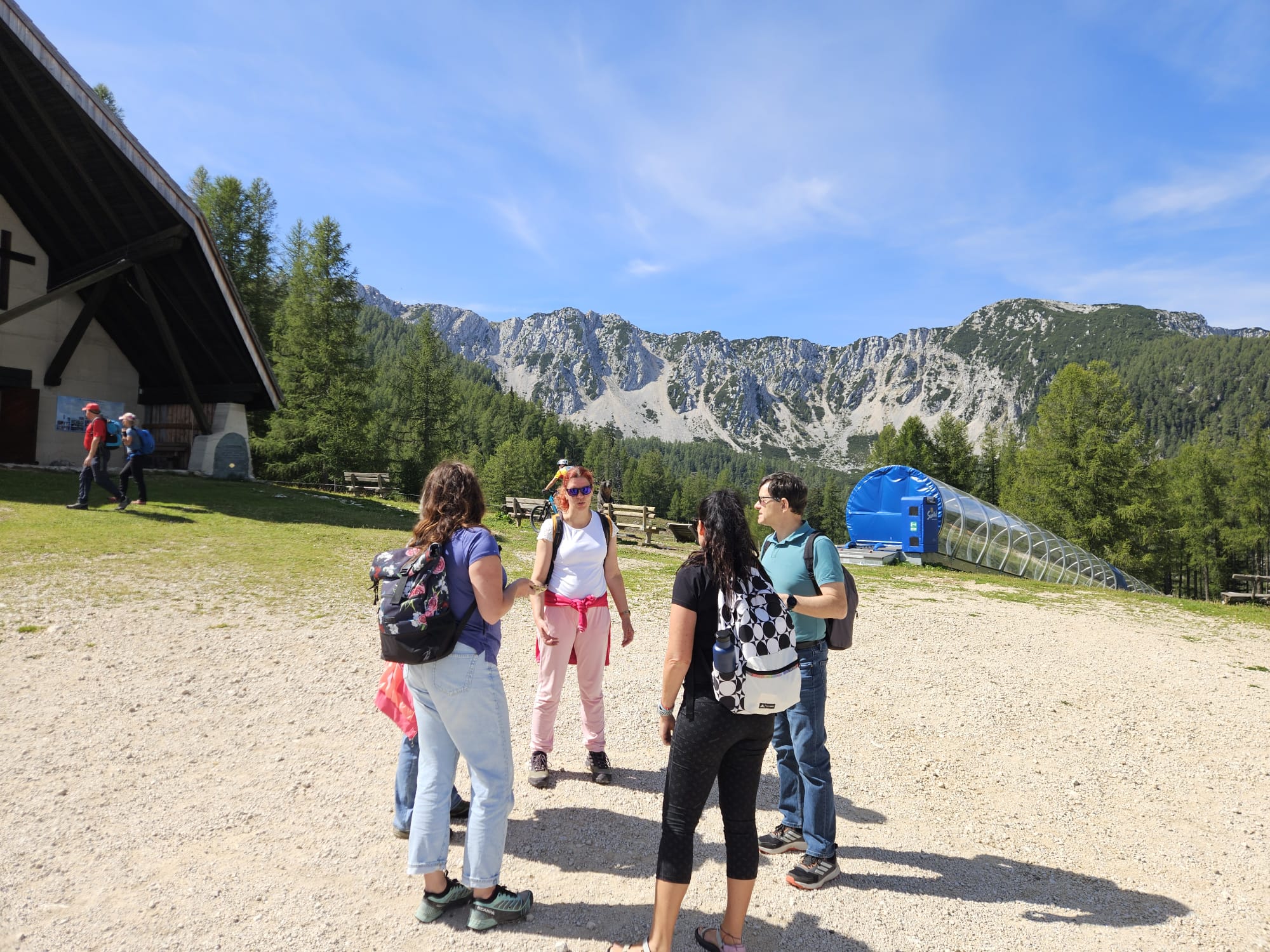
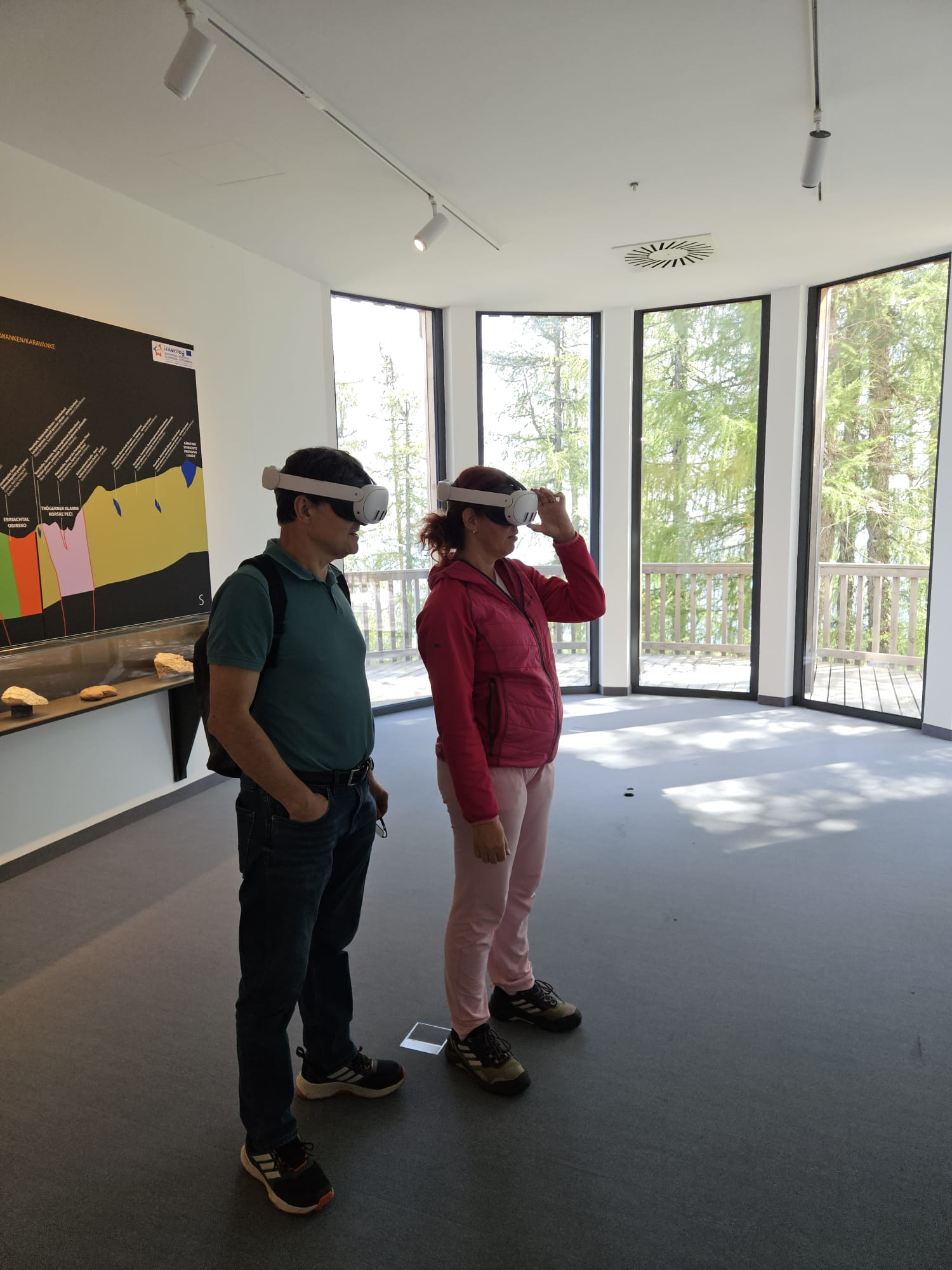
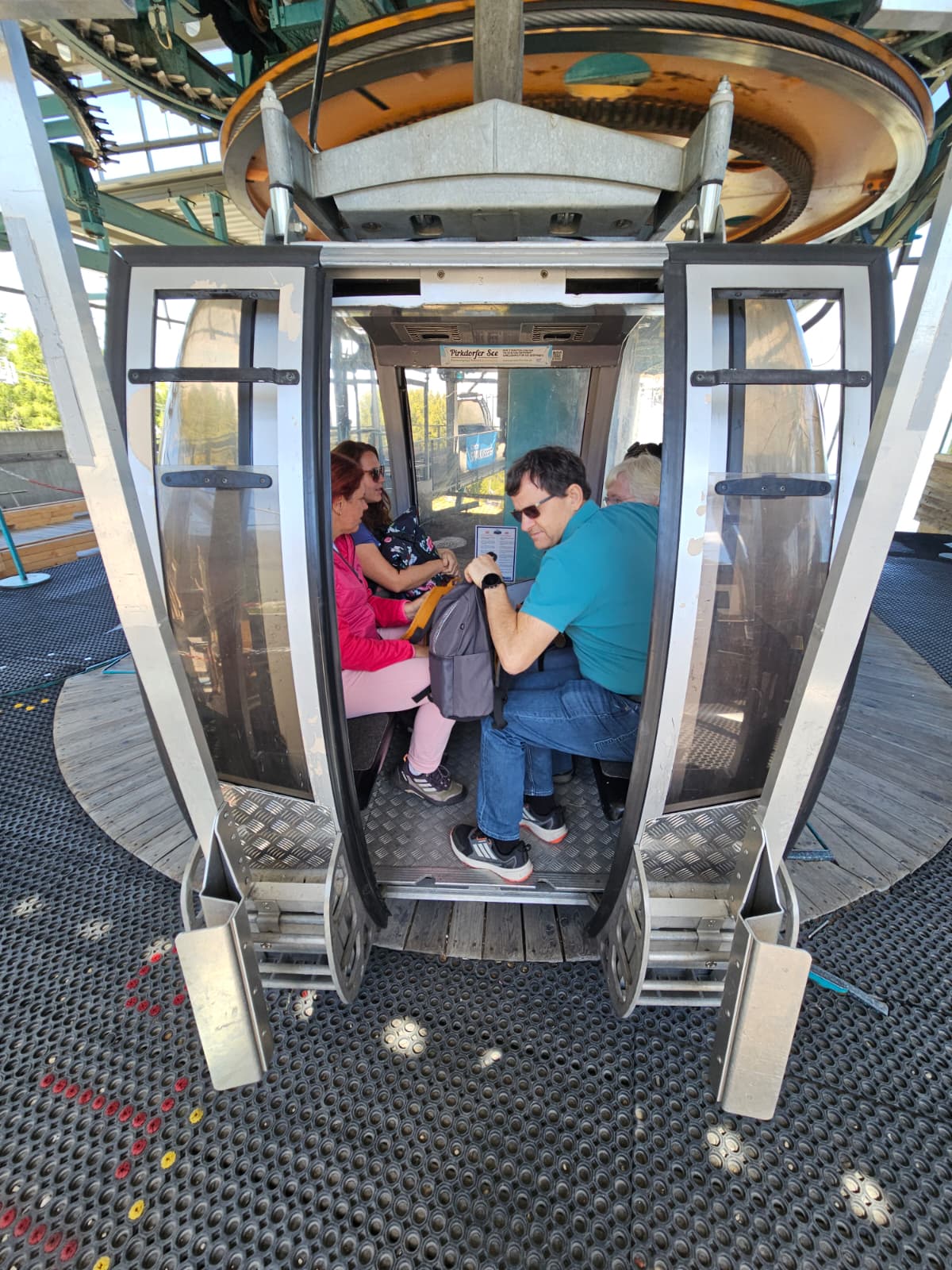
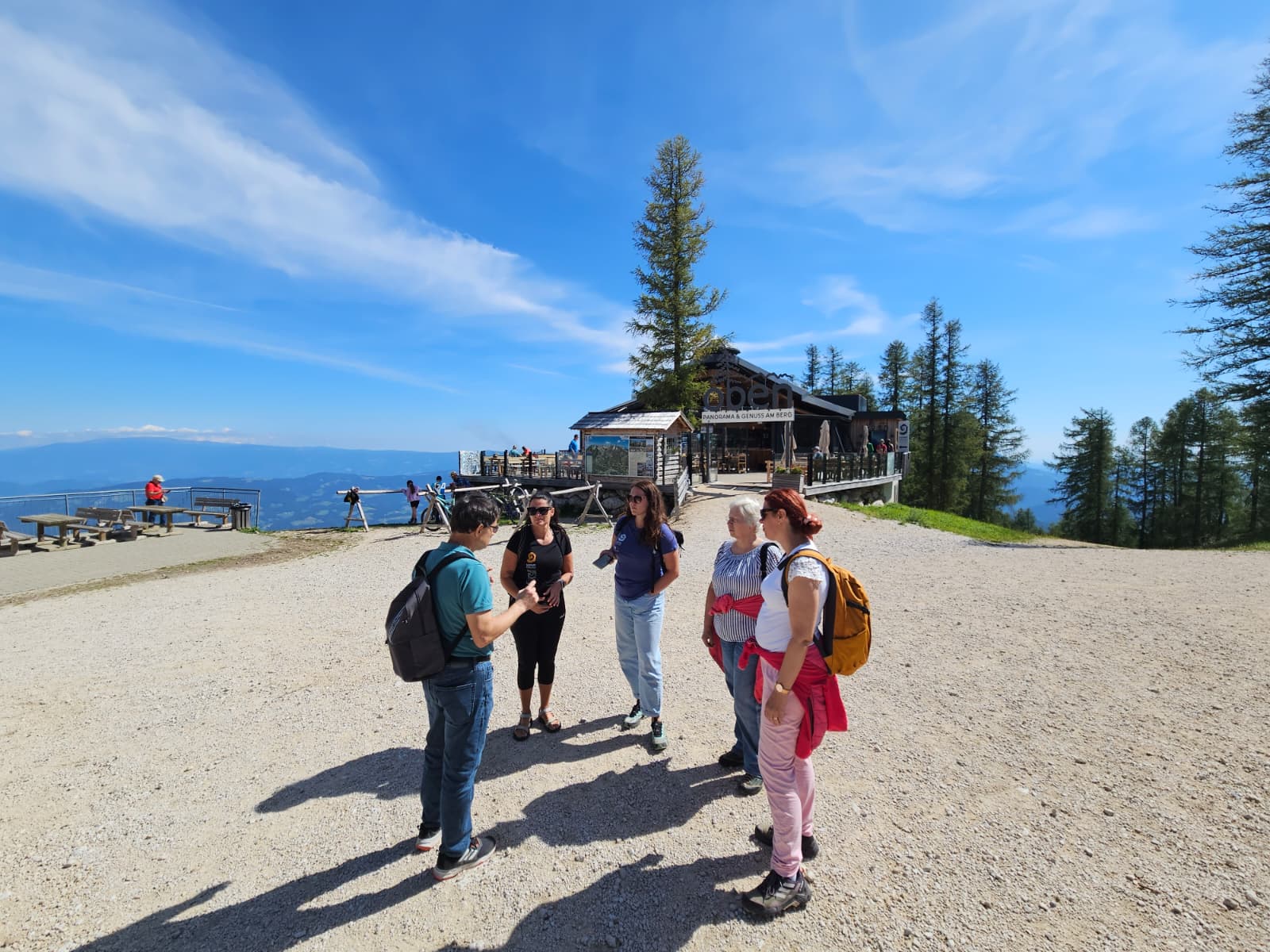
On the first day, we travelled from Ravne na Koroškem to Austria and took a cable car up to Mount Peca. We visited Geo.Dom, where we experienced a VR attraction and learned about the Geopark and its activities before taking a short walk in the surrounding area. We also visited the starting point of the trail leading towards the Church of St Hemma and Rozalija Cave, known for its spring water, which according to local tradition was believed to have healing properties for eye ailments.
We began the second day with a meeting with the manager of Hotel Wada, followed by further exploration of the tourism offer of the Meža Valley. Our itinerary included visits to the Old Ironworks, Punkl Youth Hostel, Povh Mill, the Underground of Peca, and the Črna na Koroškem Tourist Information Centre (TIC). The day concluded with a presentation on apitherapy and beekeeping in Žerjav.
The field visit provided valuable insight into the diversity of the local tourism offer and the opportunities for adapting it to the needs of different groups of visitors. The findings and experiences gathered during the visit will provide an important basis for the further development of an accessible tourism product within the CAST project.
The CAST project promotes the use of culture as a driver of social inclusion, innovation and local development. By bringing together partners from eleven countries, the project develops inclusive services and sustainable tourism products rooted in local cultural heritage and designed to connect communities.