Budapest, 7 October 2026 –How can participatory approaches in design and creative practice foster collective thinking within communities and catalyse long-term social impact? This question shaped the Inclusive creative practices day of the Social Dialogues in Art and Design Symposium SODA at the Moholy-Nagy University of Art and Design (MOME), where the international dance production D. Dance Alliance hosted part of the programme. Our colleague Mateja Softić, co-founder and co-creator of Iskriva Institute, joined the panel discussion, while our partners from MOME presented the project’s community-led approach. The day closed with the Budapest premiere of the D. Dance Alliance VR film Dancescapes, alongside a live dance performance.
Over three days, SODA brought together international and Hungarian speakers to explore how social responsibility shapes contemporary creative and design practice, with a shared focus on social dialogue, community participation and inclusive thinking.
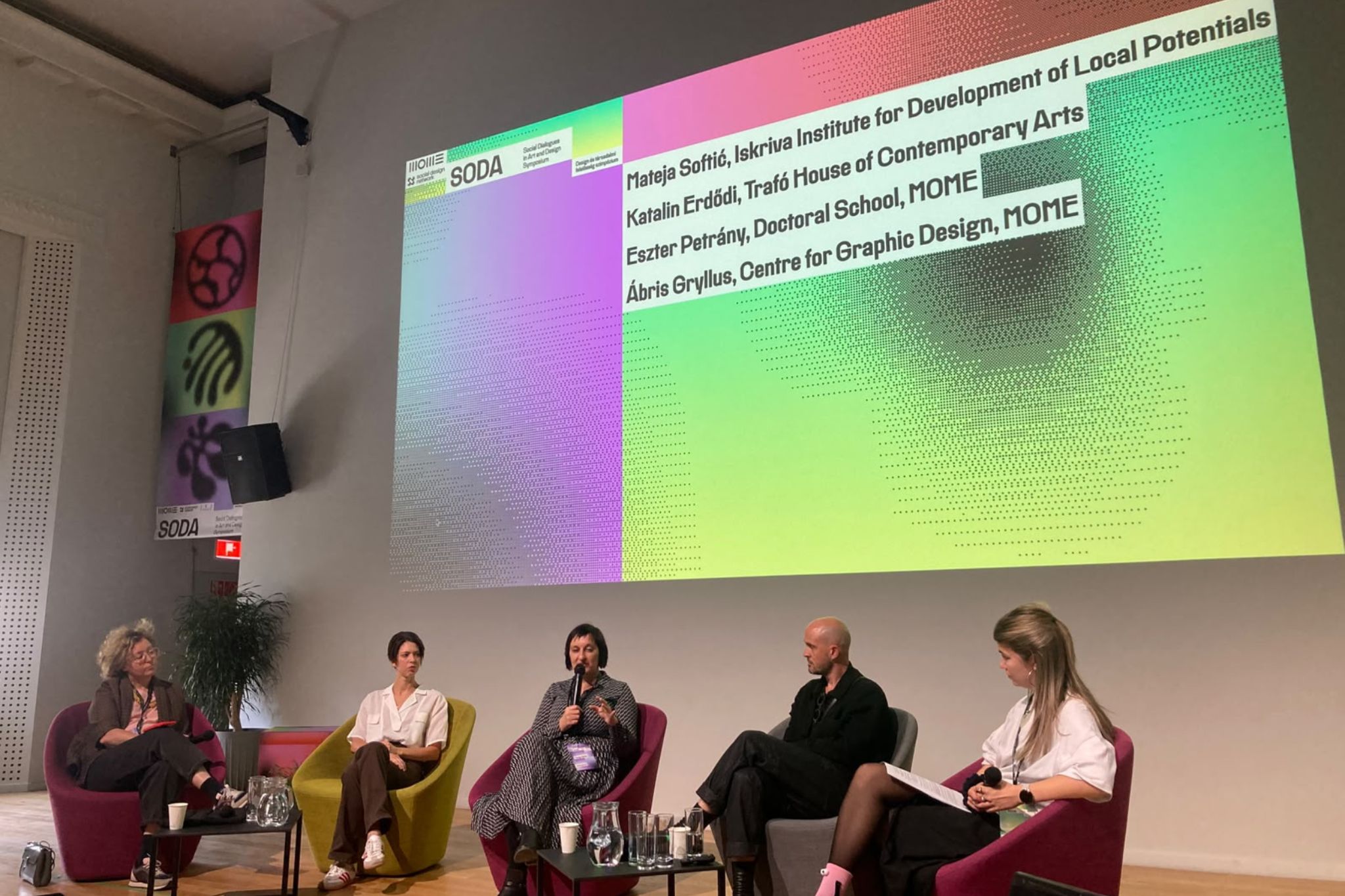
On the panel, Mateja Softić was joined by Katalin Erdődi from Trafó House of Contemporary Arts, Eszter Petrány from the MOME Doctoral School and Ábris Gryllus from the MOME Centre for Graphic Design. The discussion focused on the relationship between social design and the performing arts, on how communities can benefit from taking part in co-designing artistic and cultural activities, and on the social responsibility of arts and culture.
Mateja brought Iskriva’s perspective from the ground: enabling an environment for creativity and the arts, not only in large urban cultural centres but also in cities and regions that lack such opportunities, creates new value for these places. As opportunities grow, cities outside major urban areas become more attractive places to live, study and work, and new jobs open up across various creative sectors. This is the main motivation behind all our activities, including the D. Dance Alliance project, which has provided work and opportunities for over 50 artists and creatives from the Danube region and made high quality artistic productions accessible in regions where such opportunities are scarce.
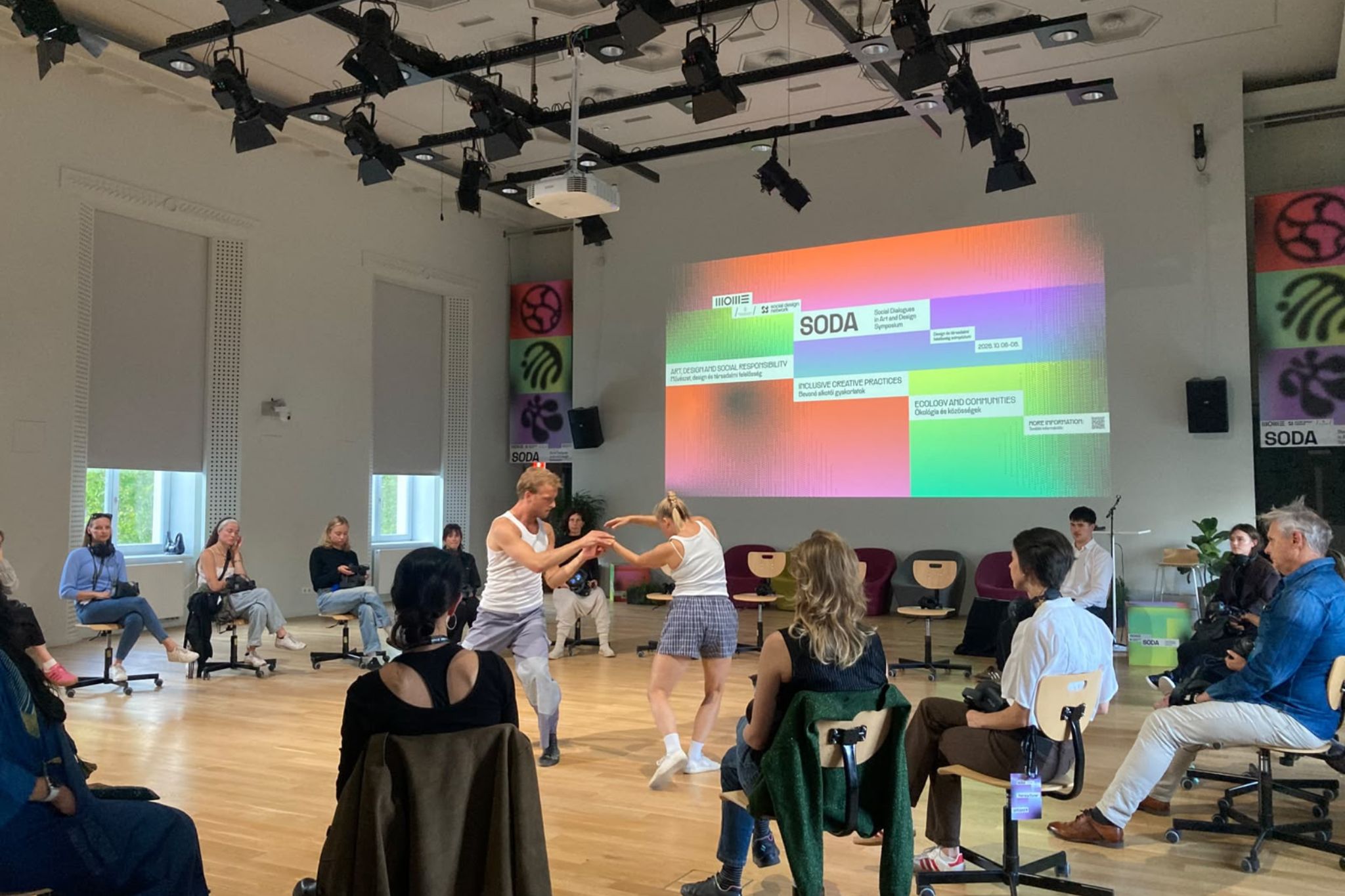
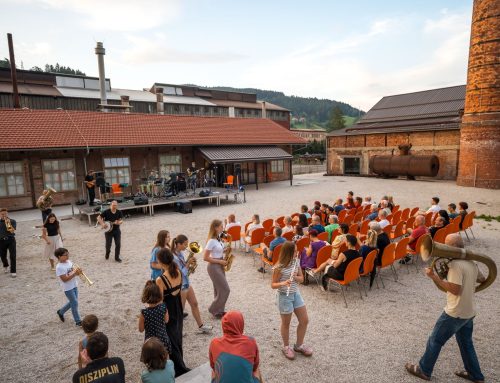
The closing hybrid D. Dance Alliance performance, part of an interactive immersive installation with contemporary dancers, paired the VR film with a live miniature featuring a scene from Workers’ Atlas, the site-specific performance created in Velenje. Moving between the virtual and the live body, the audience could experience first-hand the questions raised in the discussion. Their many questions led to a shared conversation on how community engagement and new technologies can help design more accessible cultural experiences.
Our thanks go to MOME for hosting us, and to all panellists and participants for an open and generous exchange.