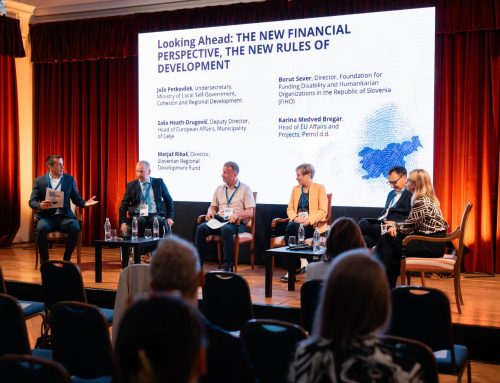
Šabac, 10–11 June 2026 – Partners of the NONA (New Governance for New Spaces) project met in Šabac, Serbia, on 10 and 11 June 2026 to review the project’s achievements to date and discuss the further development of pilot activities, as well as investment opportunities to support their long-term success and sustainability.
A key focus of the meeting was the presentation of pilot projects to representatives of the impact investing community and experts in Integrated Territorial Investments (ITI). During a dedicated “pilot pitch” session, project partners showcased their pilot activities, followed by an in-depth discussion on strengthening the governance capacities of pilot areas and creating the conditions needed to generate long-term socio-economic value for local communities.
Particular attention was given to the development of new projects, support for local businesses and initiatives with investment potential, and the identification of opportunities to better connect development ideas with available funding sources. Each pilot project also received an investment readiness assessment report containing tailored recommendations and guidance for its further development.
The recommendations provided a valuable basis for discussions on creating synergies among pilot projects, linking them with new initiatives and projects, and designing joint activities focused on capacity building, knowledge exchange, and international cooperation.
The meeting in Šabac marked an important milestone in the development of the NONA partnership and represented, in many ways, the “end of the beginning” of a shared journey. The partnership’s ambition extends far beyond the implementation of individual pilot activities. Its long-term goal is to support the gradual transformation of local environments through an impact-investment-oriented approach that fosters thriving communities while ensuring long-term social, environmental, and economic sustainability.
We are pleased to have had the opportunity to present the progress of our pilot project, receive valuable feedback from experts, and strengthen connections with organisations and investors who recognise the importance of sustainable and inclusive regional development.