Regions: An Obstacle or a Catalyst for Slovenia’s Development?
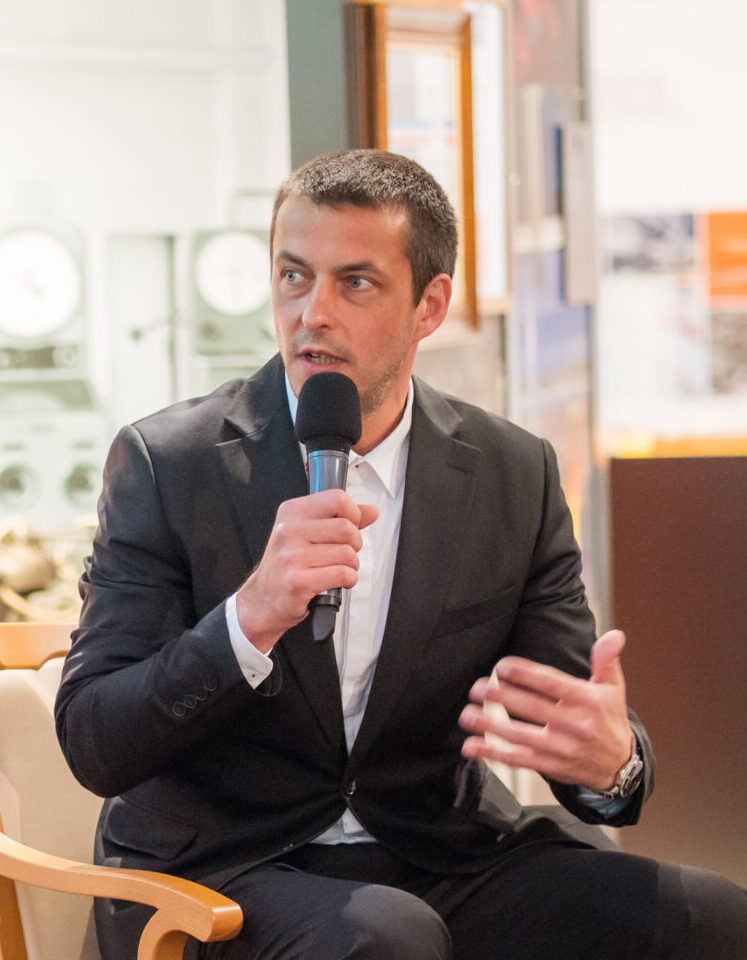
Written by Zdravko Kozinc, Co-Founder and Co-Creator, Iskriva Institute
“In the EU’s new financial perspective, starting after 2027, regions are becoming increasingly important in the preparation of national and regional partnerships. Development projects are expected to be shaped around the potential of logically connected socio-geographical areas, regions, with the aim of supporting the development of local resources into resilient communities based on short, self-sustaining value chains.
For this purpose, Slovenia is expected to receive around €5 billion in EU development funding. At first glance, this represents an exceptional opportunity and a credible basis for investment optimism. However, there is an operational challenge. Regional development agencies and programmes already exist in Slovenia, but without changes to the operational responsibilities of municipalities, regional development agencies, institutes and other agencies that have authority or responsibility for specific content, fields or areas, implementation may become an administrative bottleneck. This could slow the absorption of funds to such an extent that projects fail to achieve their intended purpose. At least not fully.
A situation that increasingly constrains development may intensify: that “the walls have no content to sustain”. In this way, development funding generates even more development projects whose primary purpose becomes sustaining other development projects.
At all levels, the European Union has become caught in the declarative trap of regional innovation. This is no longer an investment process that moves from the current state towards a different, sustainable, green and inclusive level, where the investment pays off and the new state represents a new way of functional cooperation and doing business. A state that materialises and monetises new services and products and creates markets that no longer need development funding to survive.
Innovation at EU level is turning into the hyper-intellectualisation of the process itself, where progress is measured by the complexity of the process rather than by environmentally, economically and socially sustainable outcomes.
So why does Slovenia, in this context and in the absence of regions, potentially have an additional development opportunity?
Establishing regions is an investment in optimising access to development funding that can lead to a higher standard and quality of life in a way that is economically sustainable in the market. It is a tool through which municipalities can jointly build a regional development framework that they could not create individually.
Efficient infrastructure, support services and access to knowledge based on modern technologies, together with networks through which young people can enter the wider world, can enable them, through knowledge, social capital and an understanding of global trends, to recognise local specificities as competitive advantages or development opportunities, including in terms of business potential.
A region is a tool that supports value creation. It is an operational structure that enables an understanding of local potential and global trends, while providing effective support to those who need investment in knowledge development, competences, financial resources or access to support services in order to materialise and monetise these potentials in the form of new services and products.
Slovenia can invest in developing the tools, knowledge and capacity needed to establish functional operational structures, regions, and within them models of leadership and organisation, management skills and the evolution of support structures. In doing so, it would not only establish a framework for more effective absorption of funding, but could also develop and market the knowledge needed to establish or evolve regional models elsewhere in the EU.
Alternatively, the process of regionalisation could become a hyper-intellectualised process of innovation.
Personally, I would choose the first option.”