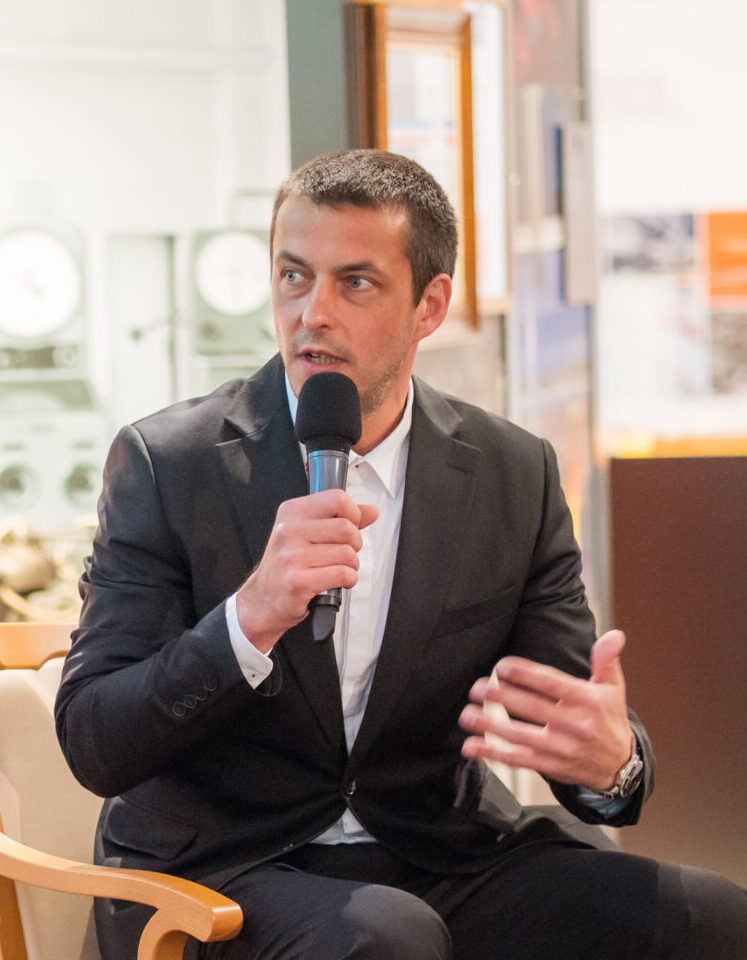
Meet the Team: ZDRAVKO KOZINC, Co-founder and Co-creator of the Iskriva Institute
Zdravko in three words:
Independent, communicative, creative.
Why is co-creating the story of the Iskriva Institute your mission?
Co-creating the story of the Iskriva Institute is my mission because I believe that collaboration, where the whole is greater than the sum of its parts, is a strong business model. The Iskriva Institute acts as a catalyst for individual potential and as a coordinator that helps build the bigger picture.
In your opinion, what are the three key elements for a successful development-oriented business model and attracting sustainable investments?
These are:
Understanding the potential and resources we can actively manage and direct to our advantage.
Knowledge to analyze global markets, enabling us to recognize opportunities, trends, and competitive advantages.
Wisdom in developing new generations of products and services that emerge as a result of investments in local resources and knowledge.
Why are public-private partnerships and collaboration among different stakeholders (capital, knowledge, local communities, etc.) so important for sustainable development?
If all segments of society are not meaningfully included in development planning—if the challenges of individual groups are ignored and their resources are not mobilized to address broader issues—we only achieve partial solutions. Such solutions may work well for one part of society but always at the expense of another. Regardless of past experiences and successes, we need to go beyond the wasteful competition over who is more important—the public or private sector. The development and leadership model of future successful societies will be based on functionally overcoming this division and on collaboration that unites knowledge, capital, and local communities into a shared vision.
Where do you see the greatest, still largely untapped potential in Slovenia and beyond?
According to the Atlas of Economic Complexity (Harvard University), Slovenia ranks an impressive ninth in the world, meaning the society has highly diverse and complex knowledge that it can turn into high-value products.
I therefore see the greatest potential in growing Slovenia as an incubator of solutions for a rapidly evolving complex global society. Slovenia has long contributed groundbreaking theoretical and high-tech solutions for demanding markets—from space technologies, medicine, and advanced industrial equipment to expertise in leadership, pedagogy, education, and sports. This unique combination of knowledge and capabilities is an extraordinary opportunity for Slovenia to establish itself even more as a global creator of complex solutions.
What book or podcast have you read or listened to recently and would recommend to everyone?
For the “brain,” I recommend The Singularity Is Nearer by Ray Kurzweil.
Among podcasts, one that comes to mind is an interview with Marco Pierre White as part of the Oxford Society Events, full of fascinating reflections on creativity, perseverance, and top-level discipline.